



What is brand strategy?
Brand strategy is your answer to three questions: who you are talking to, what you promise them, and in what voice. It is not your visual identity. The logo, colours and fonts come after it and serve it.
Many marketers sum it up in a single positioning statement, using the template from Geoffrey Moore's Crossing the Chasm:
For [your customer] who [has this need], [your product] is a [category] that [key benefit]. Unlike [what they use today], we [what sets you apart].
Write this sentence before your next post. If you cannot finish it, the problem is not your content yet.
Three frameworks marketers use
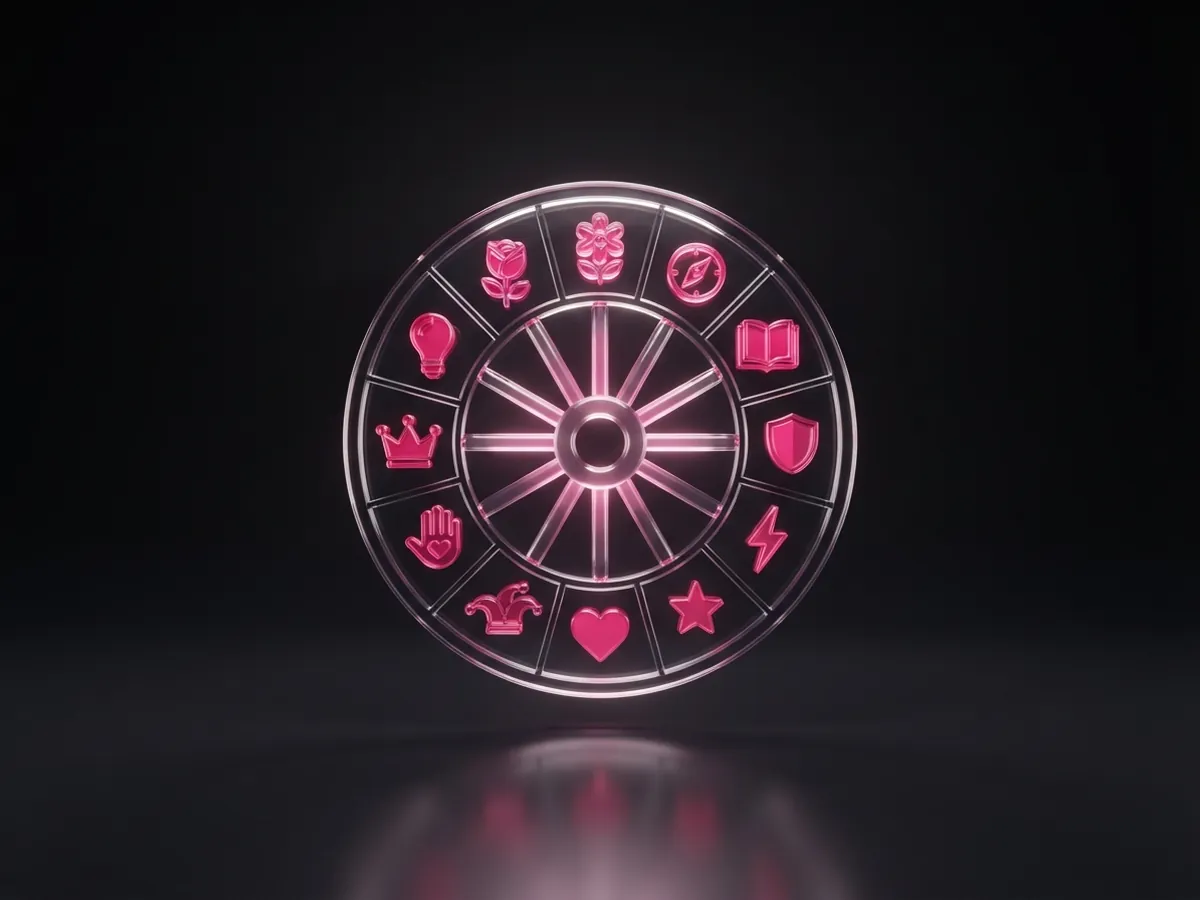
- The 12 archetypes. Margaret Mark and Carol Pearson set them out in The Hero and the Outlaw in 2001, drawing on Carl Jung's ideas about archetypes in the human mind. Each archetype is a familiar character with its own drive, promise and voice. It is the best known framework and the easiest to use.
- Brand personality dimensions. Jennifer Aaker published them in 1997 in the Journal of Marketing Research: sincerity, excitement, competence, sophistication and ruggedness. They are useful for measuring how people actually see you.
- The brand identity prism. Jean-Noël Kapferer's model has six facets: physique, personality, culture, relationship, reflection and self-image. It is useful for reviewing your whole identity, not just your voice.
This article focuses on the 12 archetypes, because they are the quickest route from an idea to a tone you can write your posts in.
The 12 brand archetypes
| Character | Archetype | Its promise | Its voice | Often cited |
|---|---|---|---|---|
 | The Caregiver | We look after the details and support you at every step | Warm, reassuring, caring | Childcare and health brands |
 | The Innocent | We make life simpler, with no fuss and no hype | Honest, optimistic, clear | Coca-Cola |
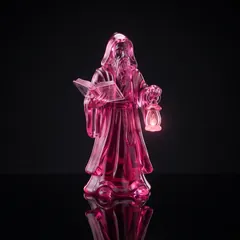 | The Sage | We give you the knowledge to make the smarter call | Expert, measured, analytical | |
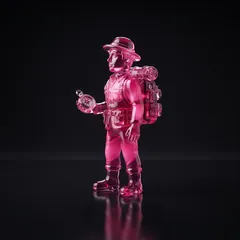 | The Explorer | We open up new experiences that break the routine | Free, energetic, fresh | Jeep |
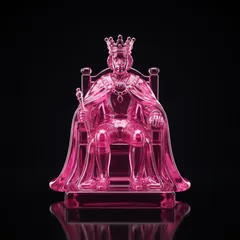 | The Ruler | We set the standard for people who want the best | Decisive, refined, eloquent | Rolex |
 | The Creator | We turn ideas into well made reality | Inspired, artistic, visionary | LEGO |
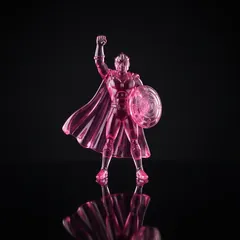 | The Hero | We help you overcome the hardest challenges | Brave, direct, motivating | Nike |
 | The Rebel | We challenge old rules and offer a bold alternative | Bold, blunt, unsettling to the status quo | Harley-Davidson |
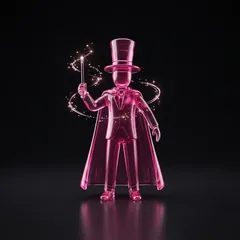 | The Magician | We turn the complicated into a result beyond expectations | Smart, confident, impressive | Disney |
 | The Everyman | We are like you and we get your day | Friendly, down to earth, natural | IKEA |
 | The Jester | We deliver value with a light touch | Spontaneous, playful, witty | Ben & Jerry's |
 | The Lover | We create experiences that celebrate beauty and detail | Passionate, elegant, magnetic | Chanel |
The global examples are common in marketing books and articles. They are not official labels from those companies.
How to choose your archetype in five steps
- Start with what you actually do. An archetype is not a costume for your ads. Ask what your customer gets when they deal with you. If your product saves them hours, you are closer to the Magician. If it reassures them and stays with them, you are closer to the Caregiver.
- Ask your customers before you ask yourself. Ask five customers to describe you in three words. What customers say about you is more honest than the archetype you wish you were. No customers yet? Ask people who have tried your product or know your work.
- Map your competitors onto the archetypes. Put each competitor in an archetype. You will often find most of them speak in one voice, for example all measured experts. The gap they leave is your chance to be seen and heard.
- Choose a primary archetype and a supporting one. The primary leads everything you say. The supporting archetype adds a touch that sets you apart from others who share your primary. At Engage we work with a rough rule of about seventy percent primary and thirty percent supporting. That is a working rule of ours, not a figure from the original book.
- Turn the archetype into written decisions. An archetype is no use if it stays in your head. Write down its tone, banned words, way of persuading, level of boldness and content angles.

Pairs that work together
- Magician with Caregiver: an impressive result, with reassurance along the way.
- Sage with Creator: deep knowledge, presented in a new way.
- Hero with Rebel: achievement, with the nerve to challenge the norm.
Avoid two archetypes that clash, such as the Ruler with the Jester. One promises prestige and the other promises a laugh, and your customer cannot tell which one you are.

What to write down for your archetype
- Tone: four words that describe your voice, and four you do not want.
- Banned words: phrases you never use, such as “hurry, while stocks last” if you do not sell on urgency.
- Way of persuading: proof and numbers, a before and after story, prestige, or simplicity?
- Boldness: reassuring, balanced or bold.
- Content angles: three kinds of post that repeat every week and serve your archetype.
Common mistakes
- Choosing the archetype you wish for, not the one you are. Promise heroics while your customer's experience is ordinary, and you lose their trust.
- Mixing more than two archetypes. Three or four voices means you have no voice.
- Changing archetype with every campaign. People remember what repeats, so give your archetype time before you judge it.
- Copying a successful competitor. Sound like them and you become a copy, and people prefer the original.
What does the research say?
These frameworks are tools for language and thinking more than precise science. In a study of 537 consumers in Portugal, Brazil, Colombia and Peru, researchers found that the words people use to describe well known brands largely match the archetypes attributed to them. But the study did not measure the effect of an archetype on sales or loyalty.
Later research has also revisited Aaker's five dimensions, finding that some of them differ between cultures and that the dimensions overlap more than they seem to.
The takeaway: use an archetype to keep your voice clear and consistent, and do not expect it to sell for you on its own.
Example: how we chose the Engage archetype
Our archetype on paper started as the Hero. Then we noticed that our approved lines are calm and precise, such as “on your behalf” and “in your language”. We also noticed that our customers' biggest barrier is trust, because Engage Chats asks them to let a tool reply to their customers.
So we chose the Magician as our primary, because it is the product's own promise: write your idea in a line and get a finished post. We chose the Caregiver as our supporting archetype, to reassure customers along the way. And we kept our boldness balanced, because agencies are potential partners for us, not rivals to attack.
Set your strategy in Engage Posts
The studio has a step called “Brand strategy”. You answer short questions about your goal, the feeling you want your posts to leave, how you persuade, the words you never use and your language. It suggests a primary archetype and a supporting one, then writes your week's plan and the copy for every post in that voice. It is included in the free plan.
Want to start with the content itself? Read how to make reels in Arabic.